Whoa!
Solana feels fast.
But the explorer you pick still shapes your day-to-day decisions.
Initially I thought any block explorer would do, but then realized the difference is subtle and sometimes brutal — UX, query speed, and token-tracking nuance all matter in ways I didn’t expect.
My instinct said choose the clean one, though actually wait—there’s more under the hood that your eyes won’t catch at first glance.
Seriously?
Yeah, because raw throughput isn’t the full story.
Network health, slot-level detail, and RPC consistency are the kinds of things that bite you on deployment day.
On one hand you want an explorer that surfaces transactions quickly; on the other hand you need one that helps you debug complex programs and trace token flows, and those two requirements rarely align perfectly in one tool.
This is where dedicated analytics and token trackers start to pull ahead, but there are trade-offs to consider.
Hmm…
I tried a few explorers when I was onboarding a new project last summer.
Some tools felt slick but omitted historical context.
Others gave deep metrics but were painfully slow and clunky, which made me lose time and patience — somethin’ I couldn’t afford.
What ended up working best for that project was a hybrid approach: quick lookup with a reliable analytics layer for deeper dives.
Whoa!
A practical example: you look up a failed transaction.
The surface view shows an error code, but not the pre- and post-account states you actually need.
So you click through to token balances, program logs, and inner instructions, and suddenly the mystery is half-solved because the explorer preserved the right context and let you follow the money flow across wrapped SOL, SPL tokens, and custom program accounts.
That kind of tracing is why token trackers and deep analytics earn their keep when you’re troubleshooting or auditing activity across accounts.
Seriously?
Yes—token metadata matters.
When a token lacks accurate metadata or a clear mint history, users get cautious and devs get defensive.
I’ll be honest: metadata inconsistencies bug me, and I’ve seen users abandon trades rather than risk being fooled by a similarly named fake token.
Tools that aggregate and present token provenance reduce that friction and help keep liquidity moving.
Whoa!
Let me be concrete for a sec.
If you want a fast initial lookup, you want minimal latency and readable transaction lists.
If you need to build dashboards or alerts, you want an API and indexed historical data that won’t choke under 10,000 requests.
Pick the wrong one and you spend days stitching data together — double work, and very very inefficient.
Hmm…
There’s a middle path that I keep recommending to teams.
Use an explorer that feels like an engineer’s tool but remains friendly for non-technical stakeholders.
That mix is rare.
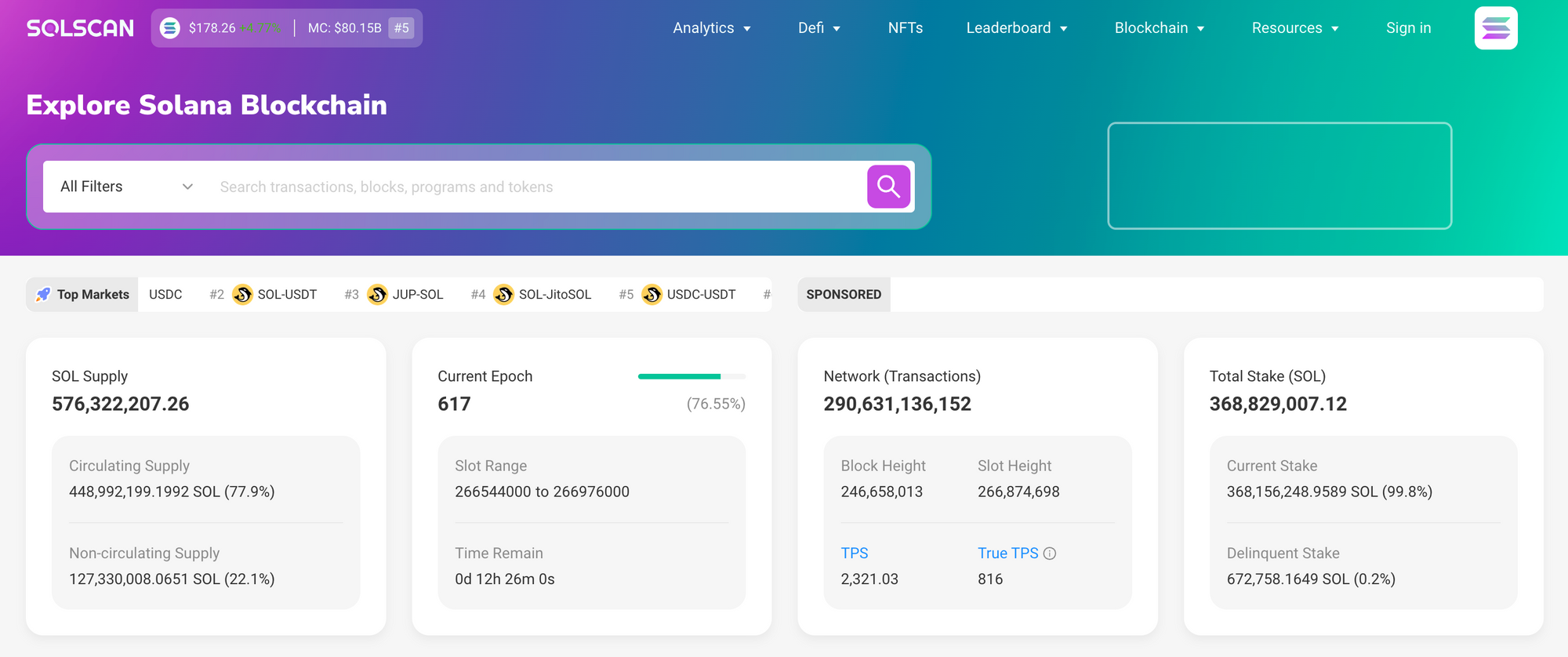
One of the explorers that often fits this description is solscan, and I point teams there when they need a reliable token tracker combined with approachable analytics.
How I Use Explorers Day-to-Day (Practical Tips)
Whoa!
Start with transaction hashes.
A quick hash lookup tells you slot, confirmations, and basic logs — and if the explorer links to decoded instructions, that’s a big help.
But don’t stop there; check pre/post balances and cross-reference token mints to make sure transfers did what they intended, because sometimes inner instructions moved funds in ways the top-level tx summary hides.
My workflow is simple: initial lookup for status, deep dive for auditing, and then export or webhook if I need to automate notifications.
Seriously?
Absolutely.
You should also verify token metadata before listing or integrating a token into UI components.
A token tracker that maintains reputation signals, verified badges, and historical mint events saves a lot of reputational risk.
On that front a combined explorer-and-analytics site helps surface suspicious patterns like dusting attacks, sudden mint spikes, or repeated small transfers that precede larger exploits.
Initially I thought raw volume would be the best health indicator, but then realized active unique addresses and fee patterns tell a more accurate usage story.
On one project I watched fees spike and unique wallets plummet, which signaled a UX bottleneck rather than organic growth — and that insight came from analytics rather than base transaction lists.
Actually, wait—let me rephrase that: volume without distribution context is misleading, and analytics give you the distribution.
Whoa!
For infra teams: monitor RPC latencies and error rates.
Medium-level dashboards show trends over time and can alert you to regressions before users notice.
Longer-term, archive indexed data so you can answer forensic questions months later without replaying transactions into a fresh node, which is slow and expensive.
That practice saved one of my teams from a compliance headache last year when they needed historical traces to respond to a partner audit.
Hmm…
I’m biased, but good tooling shortens the feedback loop between a bug and the fix.
It reduces stress.
It also makes onboarding easier for new hires who learn by following real transactions instead of reading dry docs.
Oh, and by the way, the few minutes you spend setting up reliable explorers and trackers often saves days of hunting down edge-case state bugs.
Whoa!
Security note: explorers can only show you what the chain records.
They can’t magically prove off-chain assertions, though a reputable explorer will surface on-chain evidence cleanly.
On one hand, explorers that also curate flagged addresses and alert rules help reduce fraud.
On the other hand, they can create false comfort if users assume “listed” equals “safe” — so maintain a healthy skepticism and cross-verify when necessary.
Seriously?
Yeah — and here’s a real-world sanity check.
When integrating a token swap widget, test trades on devnet and then simulate cross-program interactions on mainnet with small values.
If the explorer’s token tracker shows inconsistent balances after a swap, dig into inner instructions and program logs immediately; those details are where root causes live.
That approach has prevented costly errors for me more than once.
FAQ
Which explorer should I use for token analytics and quick lookups?
I usually recommend starting with an explorer that balances quick lookups and token tracking, like solscan, and supplementing it with an analytics platform or archived RPC for heavy querying.
Try to validate token metadata, monitor RPC health, and set up alerts for anomalous patterns.
I’m not 100% sure about every team’s constraints, but this combo is a pragmatic starting point.
发表回复